Signed in as:
filler@godaddy.com

To optimize watering for clay soil, structure your schedule around deep, infrequent applications while utilizing a "cycle and soak" method to prevent surface runoff. In the spring, when temperatures are mild, water only 1 to 2 days per week for natural precipitation levels below an inch; as peak summer heat arrives, increase frequency to
To optimize watering for clay soil, structure your schedule around deep, infrequent applications while utilizing a "cycle and soak" method to prevent surface runoff. In the spring, when temperatures are mild, water only 1 to 2 days per week for natural precipitation levels below an inch; as peak summer heat arrives, increase frequency to 2 to 3 days per week. All watering should occur during the early morning hours between 3:00 AM and 6:00 AM to minimize evaporation from heat and wind while allowing grass blades to dry quickly before nightfall, reducing disease risks. Because spray head zones deliver water rapidly at 1.5 to 2 inches per hour, they quickly surpass clay soil's slow absorption capacity—limit spray run times to 15–20 minutes total per zone in spring and 25–30 minutes total in summer, breaking those totals into 2 or 3 short cycles (8–12 minutes each) separated by an hour to let the water sink in. Conversely, rotor zones output water much slower (0.5 to 0.75 inches per hour) and require longer duration to apply sufficient moisture; set rotor zones to run for 30–45 minutes total per zone in spring and 50–60 minutes total in summer, ideally splitting summer run times into two equal halves to ensure full root penetration without pooling or wasting water.

To optimize watering for sandy soil, structure your schedule around lighter, more frequent applications because sand has a coarse texture and low water-holding capacity, allowing moisture to drain through the root zone rapidly. In the spring, when atmospheric demand is relatively low, water 2 to 3 days per week to keep the top layer of s
To optimize watering for sandy soil, structure your schedule around lighter, more frequent applications because sand has a coarse texture and low water-holding capacity, allowing moisture to drain through the root zone rapidly. In the spring, when atmospheric demand is relatively low, water 2 to 3 days per week to keep the top layer of soil moist; during the hot summer months, increase this frequency to 3 to 4 days per week (or every other day) to replenish the fast-draining moisture. Schedule your irrigation start times for early morning between 3:00 AM and 6:00 AM to take advantage of low wind and cooler temperatures, which minimizes evaporation losses and ensures water penetrates directly to the roots before the heat sets in. Because sandy soil absorbs water almost instantaneously without risk of runoff, you can deliver the entire run time in a single continuous cycle without needing to pause or split the watering. Set fixed spray head zones—which apply water at a faster rate—to run for 10 to 15 minutes per zone in the spring and 15 to 20 minutes per zone in the summer. Rotor zones, which deliver water at a significantly slower rate over a larger area, should be programmed to run for 20 to 30 minutes per zone in the spring and 35 to 45 minutes per zone in the summer to ensure enough water reaches the root depth before draining away.

To optimize watering for newly laid sod, structure your schedule around high-frequency, shallow applications to keep both the lawn pad and the underlying soil continuously moist while the root system takes hold. During the critical establishment phase (the first 10 to 14 days), water 1 to 3 times every single day regardless of season, ap
To optimize watering for newly laid sod, structure your schedule around high-frequency, shallow applications to keep both the lawn pad and the underlying soil continuously moist while the root system takes hold. During the critical establishment phase (the first 10 to 14 days), water 1 to 3 times every single day regardless of season, applying roughly 1/8 to 1/4 inch of water per session to prevent the sod pads from shrinking, turning brown, or separating; once the roots begin knitting into the soil after two weeks, gradually transition down to 3 to 4 days per week, and eventually match a standard lawn schedule by week four. Set your primary watering start times for the early morning between 3:00 AM and 6:00 AM, but during the initial two weeks, add supplemental mid-morning and mid-afternoon run times (such as 11:00 AM and 2:00 PM) to prevent the shallow, unrooted turf from baking under hot sun. Because new sod needs immediate, gentle moisture without washing out the soil underneath or flooding the seams, set spray head zones to run for 5 to 10 minutes per session during establishment (increasing to 15 to 20 minutes per session as you transition to fewer days per week). For rotor zones, which apply water much more slowly, run them for 10 to 15 minutes per session during establishment (increasing to 30 to 40 minutes per session as root depth deepens and you taper off frequency).
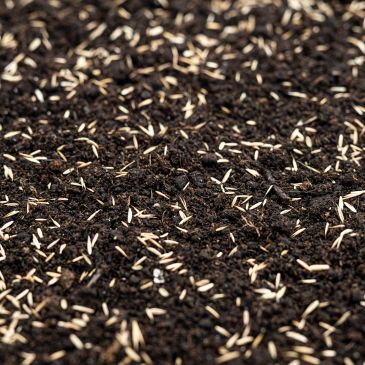
To optimize watering for new grass seed, structure your schedule around light, frequent mistings aimed exclusively at keeping the top inch of soil consistently moist without creating puddles or washouts. During the initial germination phase (the first 2 to 3 weeks until seeds sprout and reach about 1 to 2 inches in height), water 3 to 4
To optimize watering for new grass seed, structure your schedule around light, frequent mistings aimed exclusively at keeping the top inch of soil consistently moist without creating puddles or washouts. During the initial germination phase (the first 2 to 3 weeks until seeds sprout and reach about 1 to 2 inches in height), water 3 to 4 times every single day, as letting grass seed dry out even once during germination will kill the seedling. Schedule your initial run in the early morning between 5:00 AM and 6:00 AM, then space brief follow-up sessions across the day—such as 10:00 AM, 1:00 PM, and 4:00 PM—to combat sun and surface evaporation before cutting off water before dark. Because heavy blasts of water can dislodge loose seed or sweep it away, set spray head zones to run for just 3 to 5 minutes per session during germination, scaling up to 10 to 15 minutes per session as you transition to twice-daily and eventually normal watering after the grass established and has been mowed a few times. For rotor zones, which distribute water in a sweeping motion and cover larger distances, set them to run for 6 to 10 minutes per session during germination, gradually increasing to 20 to 30 minutes per session as you taper down the daily frequency and encourage the young shoots to drive deep roots into the soil.
Call or text 402.706.9573 if you would like to join our Ultra Express Service ($100 min) or Same Day Service Schedule ($125 min)